The Wig Standard
Honest reviews.
Higher standards.
Beginner Wig Buying Guide

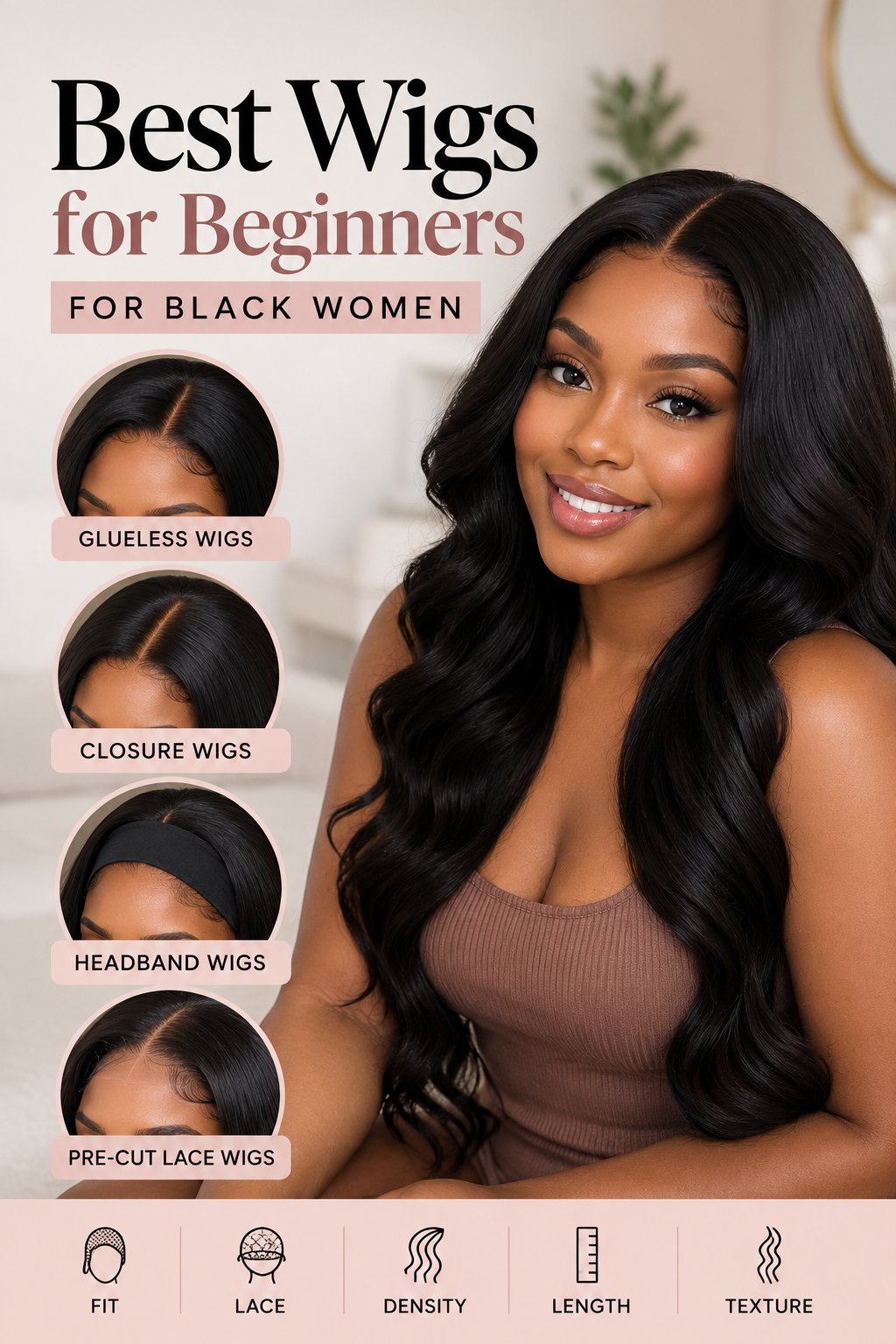
Best Wigs for Beginners for Black Women

Your first wig should make wearing wigs feel easier, not introduce five new problems at once. Start with a secure cap, manageable lace, realistic length and density, and a texture you actually want to maintain.

Black woman wearing a polished beginner-friendly wig with a natural-looking hairline
Beginner Standard The best first wig is not the one with the most lace, longest hair, or highest density. It is the one you can comfortably fit, wear, maintain, and remove.
Quick Answer Start with the easiest construction for your routine.

Glueless closure wigs can reduce both adhesive use and the amount of lace you need to manage.

Pre-cut wear-and-go wigs remove the lace-cutting step and can reduce setup time.

Headband wigs avoid lace altogether and can be among the simplest first-wig options.

Short and bob wigs can reduce tangling, drying time, and the amount of hair you have to maintain.

01 Your easiest first wig depends on which part of wig wearing you want to simplify first.
Choose the Construction First

Four beginner directions make more sense than starting with the most complicated wig.

Beginners do not all need the same wig. One woman may want zero glue. Another may be comfortable with lace but wants less hair to maintain. Another may want the fastest possible morning routine.

Instead of asking which wig is universally easiest, ask which part of wig wearing you want to make easier.

01 / Strong Starting Point

Glueless Closure Wig

A smaller lace area combined with an adjustable band or secure cap can provide a believable part without the work of a full frontal.

Good for: regular removal, lower lace maintenance, and shoppers who do not want daily adhesive.

Glueless Wig Guide
02 / Less Setup

Pre-Cut Wear-and-Go Wig

Pre-cut lace removes one of the steps many new wig wearers are most nervous about.

Good for: faster installation and shoppers who want some lace realism without cutting the front themselves.

Wear-and-Go Guidance
03 / Fastest Setup

Headband Wig

Headband wigs remove visible lace from the equation completely and can be one of the quickest first-wig constructions.

Good for: casual daily wear, exercise, errands, and shoppers who want to avoid lace installation at first.

Headband Wig Guide
04 / Less Hair

Short or Bob Wig

Shorter hair usually creates less friction against clothing and less length to wash, detangle, dry, and store.

Good for: shoppers who want easier daily hair maintenance while learning cap and lace fit.

Short Wig Guide

What worries you most about your first wig?

Choose the part you want to make simpler.

Your Starting Direction

Glueless Closure Wig

Look for a properly sized closure wig with an adjustable elastic band, straps, or another clearly explained security system. A smaller lace area can also reduce the work around the front.

Glueless Wig Guide
02 Black women do not share one complexion, hairline, texture, or wig preference.
What Deserves Extra Attention

Buy for your own complexion, hairline, foundation, and styling goals.

A wig described as being “for Black women” does not automatically mean the lace, cap, hairline, color, or texture will work for every Black woman.

Lace shade

Very light transparent lace can sometimes look pale or gray against deeper skin before tinting or blending. Look at the actual lace color rather than relying only on terms such as HD or transparent.

Your natural hairline

Hairlines vary around the temples, forehead, and sideburn area. Factory pre-plucking may reduce density, but it cannot be custom shaped for every wearer.

Texture preference

Straight, body wave, kinky straight, curly, coily, and Afro-textured wigs have very different silhouettes and maintenance routines. Choose what you actually enjoy wearing rather than what a listing implies you should want.

03 Transparent lace is a starting shade, not a promise that lace becomes invisible.
Lace & Complexion

The finished blend matters more than the marketing name.

Lace appearance is affected by color, thickness, undertone, knot visibility, makeup or tint, lighting, and installation.

For a first wig, starting with lace reasonably close to your complexion may be easier than trying to correct a strong color mismatch after purchase.

Very fine lace can also be more delicate. A beginner does not automatically need the thinnest lace available if a slightly more substantial material is easier to handle.

Transparent

Very light starting color. May need tinting or makeup.

Light Brown

A warmer starting point that may reduce visible contrast.

Medium Brown

Can provide a useful starting direction for many brown complexions.

Deeper Brown

A darker starting shade that still needs to suit the individual wearer.

Your first wig does not need every premium feature.

A large frontal, extreme density, extra-long hair, HD lace, bleached knots, and elaborate baby hairs can all be useful features.

But piling every feature into your first unit can also mean more fitting, styling, detangling, lace care, and maintenance.

Start with the features that solve a real need for you.

04 The hair underneath can change cap fit, hairline placement, comfort, and security.
The Foundation Under the Wig

A good wig still needs a comfortable base.

Braids, twists, wrapped natural hair, or another foundation should sit reasonably flat without unnecessary tension.

Braids

Cornrows can help distribute the hair more evenly under the cap, but they do not need to be painfully tight simply to create a flatter surface.

Natural hair

Depending on length and density, natural hair can be braided, twisted, wrapped, or otherwise arranged so the wig does not sit too high or develop uneven bumps.

Edges and pressure

Combs, elastic, straps, and bands should help secure the wig without relying on painful pressure around the hairline.

Wig caps

Some women prefer a wig cap for containment or comfort. Others prefer a properly fitted unit without one. A wig cap is not a universal requirement.

05 Human hair offers flexibility. Synthetic hair can offer convenience and lower cost.
Human Hair vs Synthetic

Your first wig does not automatically need to be human hair.

Human hair wigs generally provide more freedom to wash, curl, straighten, and restyle the hair. They also usually cost more and require ongoing conditioning and maintenance.

Synthetic wigs can cost considerably less and often hold the style they were manufactured with. Heat styling may be limited depending on the fiber, and long synthetic units can develop friction and tangling over time.

The better beginner choice depends on your budget, styling plans, maintenance expectations, and how often you intend to wear the wig.

Factor Human Hair Synthetic
Price Usually higher. Often lower.
Restyling Generally more flexible. Depends heavily on the fiber.
Style retention May need restyling after washing. Often returns to its manufactured pattern.
Maintenance Requires regular hair care. Different care; long fibers may tangle with friction.
Beginner fit Good when styling flexibility matters. Good when budget and convenience matter.
06 Length, density, and texture affect maintenance just as much as appearance.
How Much Hair Do You Want?

Do not choose more hair simply because the product photo looks impressive.

Length

Short and medium wigs usually experience less friction against clothing and give you less total hair to detangle, wash, condition, dry, and store.

Very long wigs can look dramatic, but the maintenance difference between an 18-inch wig and a 30-inch wig can be substantial.

Density

More density means more fullness, not automatically higher quality. A moderate-density wig can be easier for everyday wear, while very high density can increase weight, warmth, drying time, and detangling.

Texture

Curly, kinky, coily, and wave patterns can appear much fuller than straight hair at the same advertised density. Textured hair can also look shorter because the pattern pulls some of the length upward.

Beginner Comparison

Which beginner construction asks the least from you?

Factor Glueless Closure Pre-Cut Lace Headband Wig Short Wig
Glue required Usually no. Usually no for glueless models. No. Depends on construction.
Lace cutting May be required. Already done. No lace. Depends on construction.
Parting freedom Moderate. Moderate to high. Limited. Depends on cap.
Hairline realism Good around the closure area. Can be very good when fit and lace shade work. Your own front hairline may remain visible. Depends on construction.
Maintenance Depends on length and texture. Depends on length and texture. Usually straightforward. Often lower when hair is shorter.
Learning curve Low. Low. Very low. Usually low.
Before You Buy

Check the construction before you fall in love with the photo.

A beginner-friendly product listing should tell you enough about fit, lace, density, security, and returns to make a reasonable buying decision.

01

Cap Size

Measure your head. Average-size caps are not identical across every brand.

02

Lace Area

More lace gives more styling freedom but also more lace to fit, trim, blend, and protect.

03

Lace Shade

Look at the actual starting color rather than trusting transparent or HD to work on every complexion.

04

Density

Very high density means more hair to wash, dry, detangle, style, and wear.

05

Length

Long hair creates more friction and generally needs more daily attention.

06

Texture

Make sure the curl, wave, straight, kinky, or coily pattern matches the routine you want.

07

Hairline & Knots

Pre-plucked and bleached are useful claims, but individual units can still vary.

08

Security

A glueless listing should explain the elastic, straps, combs, clips, drawstring, or other security system.

09

Return Policy

Read it before cutting lace, washing, tinting, bleaching, or modifying the unit.

Beginner red flags
“Glueless” with no explanation of how the cap actually stays secure.
Extremely high density claims without useful customer photos showing crown-to-end fullness.
“Invisible lace” promises without clear lace shade or close-up hairline images.
Cap size and return conditions that are difficult to locate before purchase.
Beginner-Friendly Examples

Three configurations worth reviewing.

These are not hands-on-tested winners. They are examples from The Wig Standard product catalog whose listed construction may remove certain beginner steps.

Shorter / Smaller Lace Area

12-Inch Curly Bob 5×5 Glueless Wig

A short human-hair style with pre-cut lace, a pre-plucked hairline, and a smaller 5×5 closure area.

  • Why consider it: less lace and less length.
  • Best for: someone wanting a shorter curly look.
  • Limitation: curly hair still needs moisture and gentle detangling.
Review This Wig
Pre-Cut / Wear-and-Go

UNice 18-Inch Loose Wave 7×5 Glueless Wig

A medium-length unit with curtain bangs, pre-cut lace, pre-plucked hairline, pre-bleached knots, and glueless construction.

  • Why consider it: several customization steps are already done.
  • Best for: someone wanting face-framing styling.
  • Limitation: bang placement and cap fit still need to suit the wearer.
Review This Wig
Adjustable / High-Volume Curl

24-Inch Burmese Curly 7×6 Drawstring Wig

A curly human-hair unit with pre-cut lace, pre-plucked hairline, 7×6 lace, and adjustable drawstring-style construction.

  • Why consider it: adjustable security and pre-cut lace.
  • Best for: someone who specifically wants full curls.
  • Limitation: 250% advertised density means considerably more hair.
Review This Wig

The Wig Standard has not physically worn or tested these wigs. Product characteristics are based on seller specifications and editorial research. Review current product details and return conditions before purchasing. As an Amazon Associate I earn from qualifying purchases.

Continue Your Wig Research

Go deeper only where you need more help.

These pages answer the next decisions most beginners face after narrowing the basic construction.

Beginner Wig FAQs

Common questions from women buying their first wig.

What is the easiest wig for a Black woman to wear for the first time?

Many beginners find glueless closure wigs, pre-cut wear-and-go wigs, headband wigs, or shorter ready-to-wear styles easier because they reduce adhesive, lace work, hair maintenance, or a combination of those tasks.

Are glueless wigs good for Black women who are beginners?

They can be. A properly fitted glueless wig can reduce the need for daily adhesive and make removal easier. Check how the cap actually stays secure, including elastic, straps, combs, drawstrings, and cap size.

What lace color is best for dark skin?

There is no single lace shade that works for every dark or deep complexion. Medium-brown or deeper lace may provide a closer starting point for some wearers, while others prefer transparent or HD lace that they tint.

Should a beginner choose human hair or synthetic?

Human hair generally offers more restyling flexibility, while synthetic wigs often cost less and may hold their manufactured style with less daily work. Budget and maintenance expectations should guide the choice.

Is a 13×6 frontal too difficult for a beginner?

Not necessarily, but it provides more lace than a closure. That gives more parting flexibility while also creating more lace to fit, trim, blend, and protect.

Is 200% density too much for a first wig?

Not automatically, but higher density means more hair to wash, dry, detangle, style, and wear. Moderate density may be easier for some beginners.

What wig length is easiest for a beginner?

Short and medium lengths generally create less friction and tangling than very long wigs. Texture also affects how the same labeled length looks and behaves.

How should natural hair be prepared underneath a wig?

The goal is a comfortable, reasonably flat foundation. Depending on hair length and texture, that may involve braids, twists, wrapping, or another method. Avoid unnecessary tension simply to force the wig to sit flatter.

Do I need HD lace for my first wig?

No. HD lace can be fine and less noticeable, but cap fit, lace shade, knot appearance, construction, and installation may matter more than paying for a particular lace label.

Your first wig should teach you what you want from your second.

Start with manageable construction, get the fit right, and pay attention to what you like about the lace, length, density, texture, and routine. That experience is more valuable than buying the most complicated wig first.