Visible texture remains
The strands typically have more surface texture than silky or bone-straight wigs.

Kinky straight wigs are designed to create a straighter look while keeping visible texture, fullness, and a blowout-inspired finish. This guide covers texture realism, density, blending, heat styling, lace, parting, maintenance, and the details worth checking before buying.
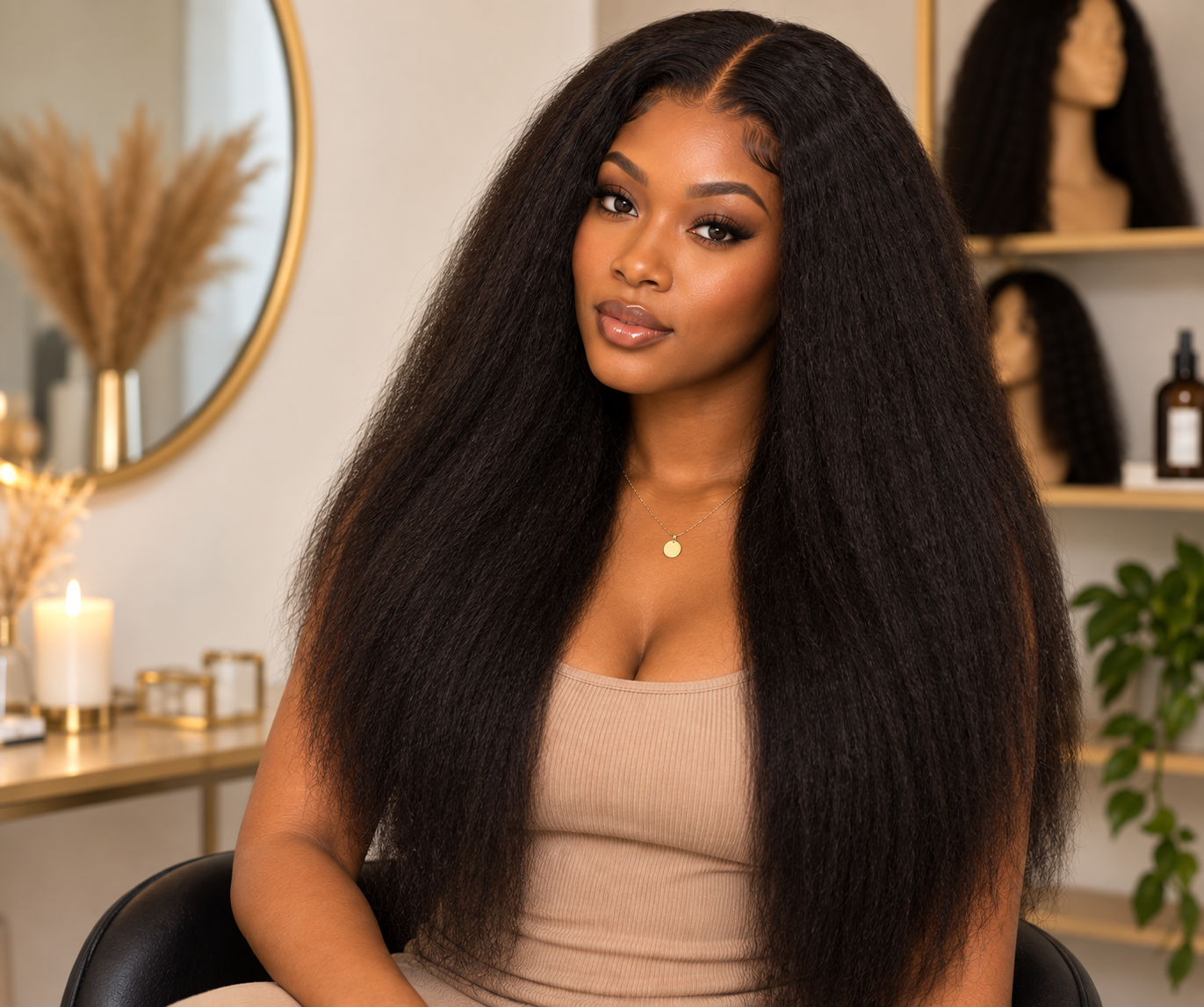
A kinky straight wig is a straight-textured wig with visible body and surface texture intended to resemble natural hair that has been stretched, blown out, pressed lightly, or otherwise straightened without becoming silky flat.
It may appeal to African American women, African women, women of color, natural-hair wearers, and textured-hair shoppers who want a straighter style while keeping fullness and texture.
The main buying questions involve how realistic the texture looks, whether the density becomes bulky, how the wig responds to humidity and heat, and how well it may blend when natural hair is visible.
The appeal of kinky straight hair is that it can create a straighter silhouette without removing all visible texture. The hair may look similar to a blowout, stretched natural hair, or hair that has been pressed while retaining body.
That can make the texture especially appealing to natural-hair wearers who prefer a fuller straight look or want a wig that feels less dramatically different from their own hair.
But sellers do not always use texture names consistently. Some kinky straight wigs may look only slightly textured, while others can have significant crimping, volume, or coarse-looking strands.
Product photos, customer images, texture close-ups, and reports about washing and heat styling are therefore more useful than the name alone.
Kinky straight sits in a useful space between silky straight hair and visibly curly or coily textures.
The strands typically have more surface texture than silky or bone-straight wigs.
Kinky straight hair can appear substantially fuller than smooth straight hair at a similar listed density.
The texture can create a fuller silhouette while still allowing the hair to move as a straight style.
Kinky straight may blend more naturally with blown-out or stretched textured hair than silky straight textures.
Human hair versions may be heat styled, but repeated straightening may alter the original texture.
Hair quality, processing, products, and environmental conditions may affect how smooth or full the hair remains.
Kinky straight may suit someone who likes straight hairstyles but finds very silky textures too flat or too different from the finish they prefer.
It may also suit textured-hair wearers who want a blowout-inspired look, fuller ponytail appearance, soft layers, or a style that can relate more naturally to visible edges or leave-out.
The texture can work for everyday wear, professional styling, church, travel, events, and protective-style routines where a polished but textured finish is preferred.
It may be less suitable for someone who specifically wants pin-straight, glass-like hair with very little volume.
Half wigs, U-part wigs, V-part wigs, headband wigs, and other leave-out styles can expose natural hair. In those situations, texture matching matters as much as the wig itself.
Kinky straight may blend well with natural hair that has been stretched, blow-dried, lightly pressed, or otherwise styled into a fuller straight finish.
Color and shine must also match. A texture can be close in pattern but still look disconnected if the wig is much shinier, darker, warmer, or cooler than the natural hair.
The most practical texture is usually one that does not require excessive manipulation of your own hair every day just to maintain the blend.
Texture is only one part of the decision. Cap design, lace, parting, length, and density still matter.
Longer lengths can create a dramatic blowout-inspired look but may need more detangling and storage care.
Bob lengths can combine fuller texture with easier everyday management.
Layers can help distribute volume and soften the silhouette around the face.
Glueless construction may reduce adhesive use, though fit, lace, and band placement still deserve attention.
Lace-front construction may offer more flexibility around the hairline depending on lace size and quality.
U-part, V-part, and half-wig styles may use visible natural hair to create the front or part.
Sellers may describe these textures differently, so use actual product photos and customer images to confirm the finish.
| Texture | Typical Finish | What to Watch For |
|---|---|---|
| Silky Straight | Smooth, sleek, and relatively flat. | Excess shine, stiffness, and thin ends. |
| Yaki Straight | Straight with moderate textured appearance. | Texture accuracy and seller terminology. |
| Kinky Straight | Fuller, textured, blowout-inspired straight finish. | Bulkiness, density, tangling, and texture retention. |
| Kinky Curly | Tighter curls with natural-hair-inspired fullness. | Shrinkage, dryness, matting, and curl maintenance. |
| Afro-Textured | Fuller coily or Afro-inspired texture and shape. | Density, moisture, shape, and maintenance needs. |
Check texture definition, density, cap size, lace type, parting space, hairline, length, ends, hair or fiber type, heat guidance, return policy, and customer-reported experiences.
Customer photos can reveal whether the texture really looks like a blowout or simply like heavily crimped straight hair.
Look for recurring reports about tangling, shedding, softness, odor, heat styling, washing, density, texture changes, and how manageable the wig feels over time.
Kinky straight texture already creates fullness. Very high density can become bulky and heavy.
Repeated high heat may reduce the original texture, depending on the hair and processing.
If your natural hair will remain visible, check whether the wig's texture, color, and shine can realistically blend.
The appeal of kinky straight hair is its textured surface and body. It should not necessarily look glass-smooth.
Sellers may use “kinky straight” differently. Always inspect the actual texture shown.
These pages help place kinky straight alongside other textures and wig constructions.
Review straight, wavy, curly, kinky straight, and Afro-textured wig options.
Read the GuideReview silky, yaki, bone-straight, and other straight wig textures.
Read the GuideUnderstand yaki texture, relaxed-hair-inspired finishes, density, and styling.
Coming SoonLearn how texture matching and leave-out affect half-wig blending.
Read the GuideReview cap fit, bands, lace, combs, and no-adhesive construction.
Read the GuideBrowse research-based reviews and customer-reported patterns.
Browse ReviewsKinky straight hair usually has a straighter overall shape with visible texture and fullness, often resembling stretched, blown-out, or lightly pressed natural hair.
Not necessarily. Both are textured straight styles, but kinky straight often has more visible body and texture. Sellers may use the terms differently.
They can look natural when the texture, density, hairline, parting, color, and shine suit the wearer and the overall style.
Some human hair kinky straight wigs may tolerate heat styling, but the seller's heat guidance should be checked before using hot tools.
It can be useful for leave-out styles when the natural hair can be styled to a similar texture, color, density, and shine.
Check texture close-ups, density, cap fit, lace, parting, hairline, length, ends, heat guidance, return policy, customer photos, and recurring reports about tangling, shedding, washing, and texture retention.
Use The Wig Standard’s guides and reviews to evaluate texture realism, density, blending, movement, lace, heat styling, seller claims, and customer-reported experiences before buying.