The ends define the bob
A blunt bob, angled bob, or layered bob depends on the finish at the ends. Uneven or thin ends can make the wig look less polished.

Bob wigs are clean, structured, stylish, and easy to recognize, but the best choice depends on cut, density, lace, parting space, cap fit, texture, and how the bob frames the face. This guide helps you understand what to check before buying.
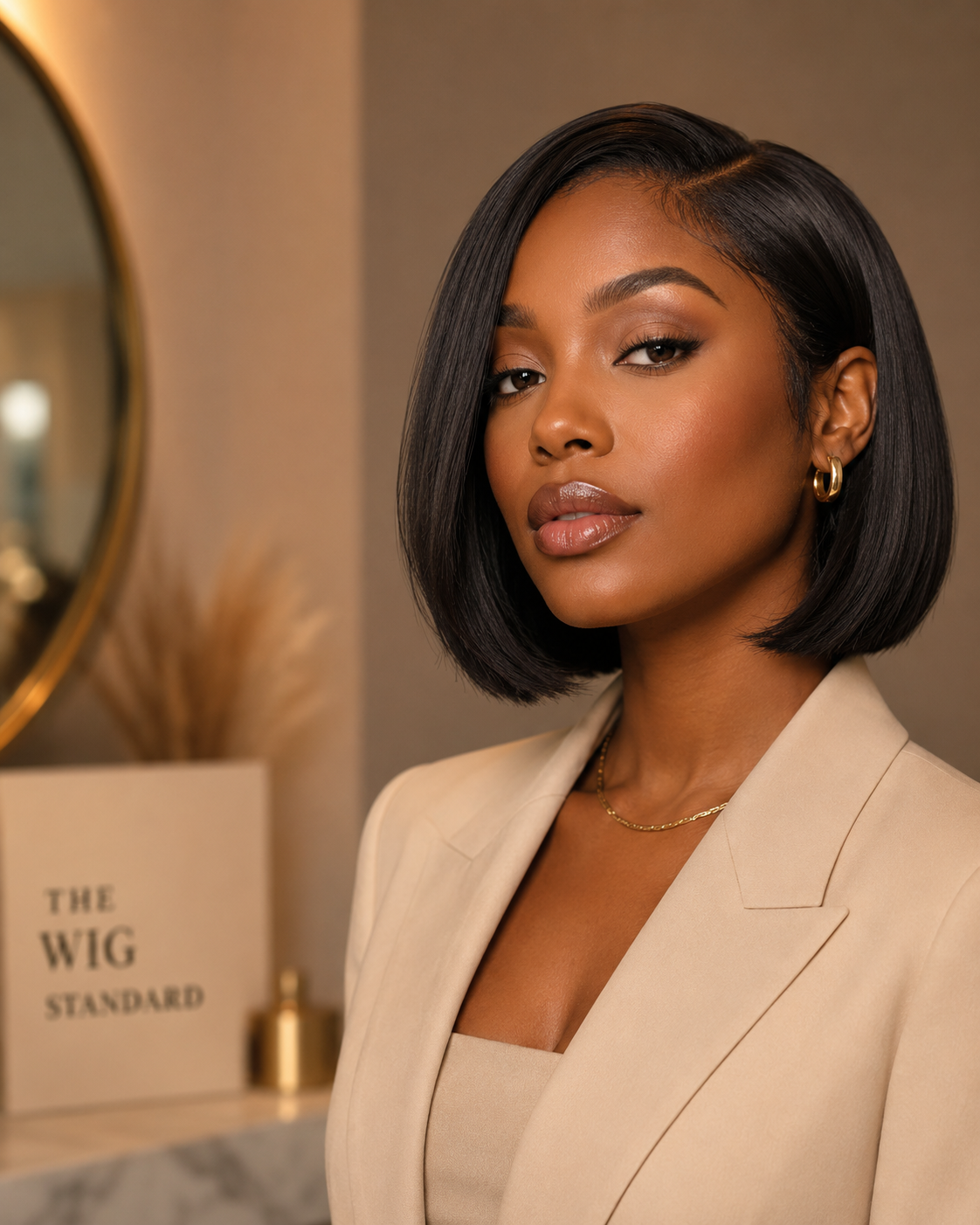
A bob wig is a wig cut into a shorter, structured shape that usually falls around the chin, jawline, neck, or shoulders. Bob wigs can be blunt, layered, angled, asymmetrical, curly, straight, wavy, side-parted, middle-parted, lace-front, closure, glueless, or bang styles.
Bob wigs are often chosen by Black women, African American women, African women, women of color, and textured-hair wearers who want a polished look without the weight and maintenance of longer wig styles.
The main benefit is structure. The main challenge is that the cut has to be right. A bob wig with uneven ends, bulky density, poor parting, or an awkward length can look less refined than the product photo suggests.
Bob wigs are popular because they offer a strong style without extreme length. A good bob can look professional, classic, modern, soft, bold, or elegant depending on the cut and texture.
But the simplicity of a bob also makes weak details easier to notice. Uneven ends, too much bulk near the jaw, poor layering, an awkward part, a stiff hairline, or a cap that does not sit flat can change the entire look.
The most important questions are not just “Is it short?” or “Is it human hair?” A stronger buying decision looks at the bob shape, cap construction, lace or closure area, parting direction, density, fiber or hair quality, texture, and return policy.
This page gives you a practical framework for choosing bob wigs with more confidence before you order.
The shorter structure means the front, sides, ends, nape, and parting area all matter.
A blunt bob, angled bob, or layered bob depends on the finish at the ends. Uneven or thin ends can make the wig look less polished.
A bob can fall at several points. The same wig length may look different depending on face shape, neck length, and body frame.
Bob wigs need enough hair to look full, but too much density can make the sides or ends look heavy.
Middle parts, side parts, deep side parts, and no-part bang styles can change how the bob frames the face.
A bob wig has less length to hide cap problems. A bulky crown, lifting lace, or poor ear-tab placement can stand out quickly.
Texture affects movement, volume, maintenance, and realism. A sleek bob feels very different from a curly or yaki bob.
A bob wig may suit someone who wants a style that looks finished without the length, weight, and detangling time that can come with longer wigs. Bob wigs can be practical for work, church, travel, events, dinners, photos, and everyday routines.
They may also appeal to women who like a neat silhouette around the face and neckline. A bob can sharpen the jawline, soften the cheeks, create movement around the shoulders, or give the face a more styled frame.
For textured-hair wearers, yaki bob wigs, kinky straight bobs, curly bobs, and natural-texture bobs may feel more familiar than silky straight styles. The best texture depends on the look you want and how much daily styling you are comfortable doing.
A bob wig may not be ideal if you want high ponytails, dramatic length, loose long curls, or a style you can restyle many different ways. Many bob wigs are more fixed in shape.
A chin-length bob can feel bold and face-framing. A jawline bob can look clean and structured. A neck-length bob may feel more classic. A shoulder-skimming bob can offer more movement while still staying manageable.
Bangs can make a bob easier if you do not want lace blending, but they can also limit styling. A side part can soften the face. A middle part can feel sleek and symmetrical. An angled bob can add drama, but only when the cut line is clean.
Texture changes the shape too. Straight bobs show every line and end. Yaki bobs may feel more natural for some textured-hair wearers. Curly bobs need a good shape so the volume does not become too round or uneven.
Before buying, look for product photos from the front, side, and back. A bob that only looks good from one angle may be hiding a weak cut.
Choose by cut shape, texture, face framing, cap comfort, and how much styling you want to do.
A blunt bob has a strong cut line. It can look polished, but uneven ends or heavy density are easier to notice.
Layers can reduce heaviness and help the bob move better, especially around the face and shoulders.
An angled bob can look dramatic and modern, but the side view and back shape need to be clean.
Curly bob wigs can feel soft and full, but curl shape, density, tangling, and maintenance should be reviewed.
Yaki bob wigs may suit shoppers who want a straighter look with texture that feels closer to relaxed or blown-out hair.
A bob with bangs can hide the front hairline, but bang shape, thickness, and length should still fit the face.
These are general differences. Individual wigs can vary by seller, construction, density, texture, fiber, and cap design.
| Length or Style | Main Benefit | What to Watch For |
|---|---|---|
| Bob Wigs | Clean structure with more shape than longer styles. | Ends, density, parting, face framing, and side view. |
| Short Wigs | Lightweight and often easier to manage. | Nape, cut shape, cap fit, and limited styling flexibility. |
| Medium-Length Wigs | More movement and styling room without extreme length. | Shoulder friction, tangling, and density balance. |
| Long Wigs | Dramatic length and styling variety. | More weight, tangling, shedding concerns, and maintenance. |
| Bob with Bangs | Can avoid lace blending at the front. | Bang thickness, face shape, and limited parting options. |
Before buying, check the length, cut line, side view, back view, density, cap size, lace type, parting space, texture, fiber type, and return policy.
A strong listing should show the ends clearly, not just one polished front-facing photo.
If the product page hides the back, sides, parting area, or real movement, slow down and look for customer photos, seller answers, or a clearer product listing.
The ends are one of the first things people notice on a bob wig. Thin, uneven, stiff, or overly heavy ends can weaken the style.
A bob needs body, but too much hair can make the sides and jawline look bulky. Density should support the cut, not overwhelm it.
A bob can look beautiful from the front and awkward from the side. Side and back photos are especially important.
Some bob wigs need flat ironing, bumping the ends, curl refreshing, lace work, or careful parting to keep the shape clean.
A bob’s length and part can change how the face looks. Jawline, cheekbones, forehead height, and neck length all affect the final result.
These guides support the decisions that often come up when choosing bob wigs, short wigs, and structured styles.
Learn the basics of wig types, lace, cap size, density, texture, hairlines, and buying checks.
Read the GuideReview pixie wigs, cropped wigs, short bobs, tapered cuts, cap fit, density, and nape shape.
Read the GuideLearn how lace fronts affect hairline realism, lace shade, knots, parting, and fit.
Read the GuideUnderstand where wig lengths fall and how length affects styling, comfort, and maintenance.
Coming SoonLearn how yaki texture may suit shoppers who want a straighter style with textured realism.
Coming SoonBrowse research-based reviews that separate seller claims, customer reports, and editorial notes.
Browse ReviewsBob wigs can be beginner-friendly when the style has a forgiving part, manageable density, and a clear cut. Bang bobs and glueless bobs may be easier for some beginners.
Some lace-front bob wigs may be worn with adhesive, while others are glueless, closure, bang, headband, or basic-cap styles. Check the construction before buying.
The best length depends on face shape, neck length, comfort, and personal style. Chin-length, jawline, neck-length, and shoulder-skimming bobs all create different effects.
Bob wigs may be easier because there is less length to detangle and manage. However, some bobs need regular shaping, flat ironing, curl refreshing, or end styling.
Bob wigs can look natural when the cut, density, parting, hairline, cap fit, and texture suit the wearer. Poor shape or stiff ends can make the wig look less realistic.
Check the front, side, back, ends, density, cap size, lace type, parting area, texture, fiber type, return policy, and customer photos when available.
Use The Wig Standard’s guides and reviews to examine cut shape, ends, density, parting space, cap fit, lace, texture, seller policies, and customer-reported patterns before you decide.