Sleek and polished
Straight wigs can look clean, professional, and easy to style. Watch for shine, stiffness, density, and whether the hair moves naturally.
Straight Wigs
Wig texture affects how a wig looks, moves, blends, tangles, holds style, and fits into your daily routine. This guide explains the major wig textures, how they differ, and what Black women, African American women, African women, women of color, and textured-hair wearers should check before choosing.
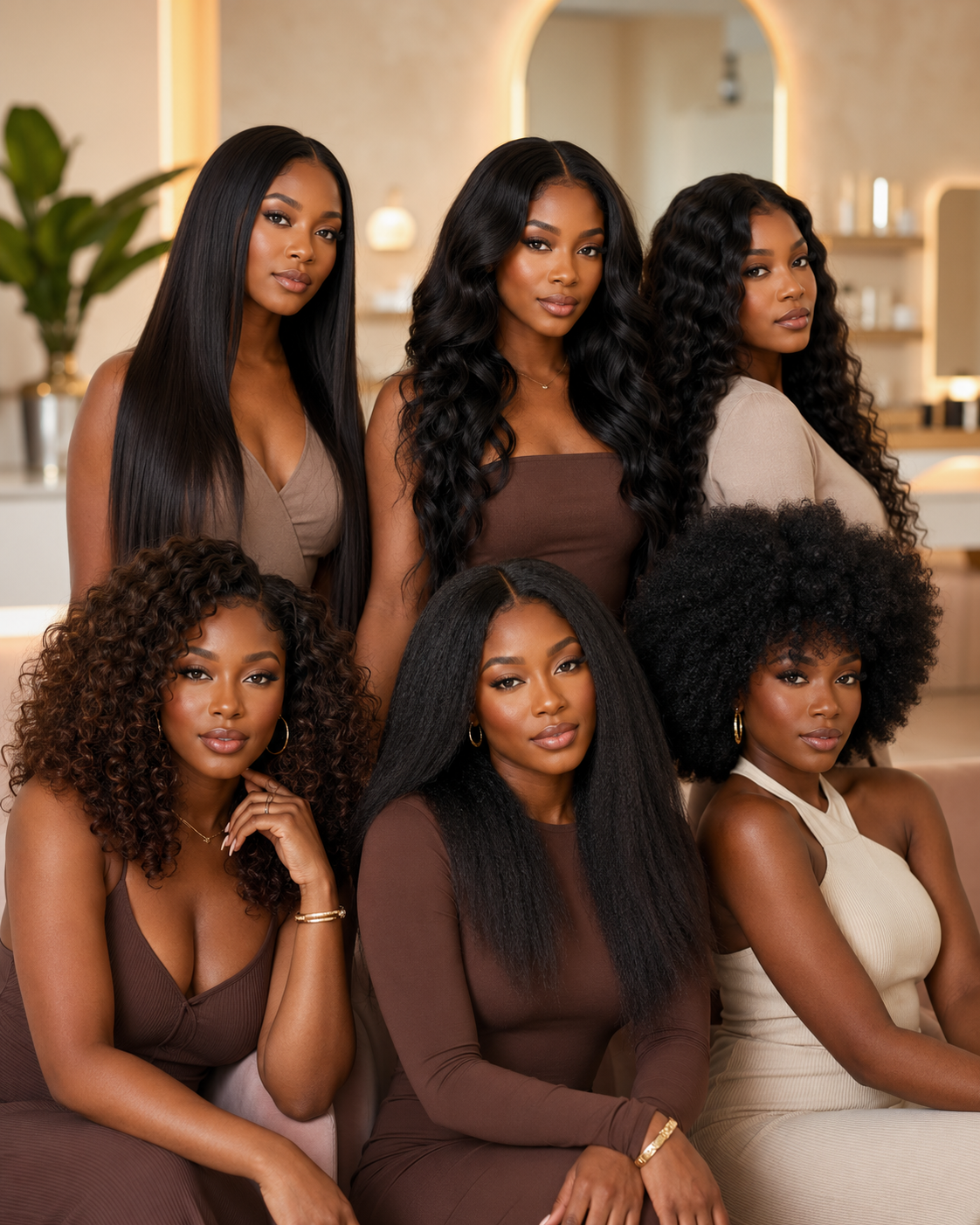
Wig texture describes the pattern, surface feel, movement, and finish of the wig hair. Common textures include straight, body wave, deep wave, curly, kinky straight, yaki, coily, and Afro-textured styles.
Texture affects how realistic a wig looks, how much styling it needs, how well it may blend with natural hair, and how much maintenance the wearer should expect.
For textured-hair wearers, the best wig texture is not always the most popular one. It is often the texture that matches the wearer’s lifestyle, face framing, natural-hair goals, comfort level, and styling habits.
Wig texture is one of the first things shoppers notice, but it is also one of the easiest things to underestimate. A texture can look beautiful in a product photo and still be wrong for your routine if it tangles quickly, needs constant refreshing, looks too shiny, or does not blend with your preferred style.
Straight wigs may feel sleek and polished. Body wave wigs may offer soft movement. Deep wave and curly wigs may create more volume. Kinky straight and yaki textures may feel closer to blown-out, relaxed, or textured hair. Afro-textured and coily wigs may offer fuller natural-hair-inspired looks.
For Black wig wearers and women with textured hair, texture can be especially important because it affects how the wig relates to natural hair, edges, leave-out, hairline styling, and personal beauty preferences.
This hub gives you the overview first. Then each individual texture page can go deeper into styling, maintenance, buying checks, and review criteria.
Start with the texture family, then narrow by cap type, length, density, lace, and daily maintenance.
Straight wigs can look clean, professional, and easy to style. Watch for shine, stiffness, density, and whether the hair moves naturally.
Straight WigsBody wave wigs offer a looser wave pattern that can feel more dressed up than straight hair without becoming as full as deep wave or curly hair.
Body Wave WigsDeep wave wigs create stronger texture and fullness. They may need more refreshing, detangling, and care than softer wave patterns.
Deep Wave WigsCurly wigs can create a full, feminine look, but curl pattern, shedding, tangling, dryness, and product routine should be reviewed carefully.
Curly WigsKinky straight wigs may suit women who want a straighter look with texture, fullness, and a finish closer to stretched natural hair.
Kinky Straight WigsAfro-textured wigs can offer fuller shape and stronger texture, especially for shoppers who want styles closer to coily or Type 4 hair.
Afro-Textured WigsTexture matching matters most with half wigs, headband wigs, leave-out styles, U-part wigs, V-part wigs, and any style where natural hair remains visible. A beautiful wig can still look disconnected if the front hair does not blend with the wig’s surface, curl, shine, or density.
Kinky straight wigs may blend better with blown-out or stretched natural hair. Yaki textures may suit relaxed or lightly textured straight looks. Curly wigs may work better when the leave-out can be curled, twisted, braided, or refreshed to match. Coily and Afro-textured wigs may suit fuller natural-hair-inspired looks.
Color and sheen matter too. A texture can match the curl pattern but still look off if the wig is too shiny, too black, too brown, too red, or too silky beside the wearer’s natural hair.
When possible, choose a texture that works with a style your natural hair can already hold without daily stress.
Straight textures may be easier to brush, smooth, and restyle, but they can also show stiffness, thin ends, shine, or heat damage more clearly. Body wave textures may look soft at first, but wave pattern can loosen depending on hair quality, washing, heat, and product use.
Deep wave, curly, coily, and Afro-textured wigs may require more detangling, moisturizing, curl refreshing, drying time, and careful storage. These textures can be beautiful, but they should be chosen with maintenance in mind.
Kinky straight and yaki textures may offer a good middle ground for some wearers because they can feel more textured than silky straight hair without the same curl-refreshing routine as deep wave or curly wigs.
Product listings often make every texture look easy. A stronger buying decision looks at customer-reported tangling, shedding, dryness, curl retention, frizz, odor, and how the texture behaves after washing.
These are general texture patterns. Individual wigs can vary by seller, hair quality, processing, density, cap construction, and care routine.
| Texture | Often Best For | What to Watch For |
|---|---|---|
| Straight | Sleek, polished, simple styling and clean parting. | Shine, stiffness, thin ends, density, and heat response. |
| Body Wave | Soft movement without dramatic curl volume. | Wave retention, frizz, loosened pattern, and styling needs. |
| Deep Wave | Defined waves, fullness, and more dramatic texture. | Tangling, dryness, product buildup, and detangling routine. |
| Curly | Volume, softness, movement, and curl-focused looks. | Curl pattern, shedding, tangling, frizz, and refresh routine. |
| Kinky Straight | Blowout-inspired texture and fuller straight styling. | Bulkiness, heat response, texture realism, and density. |
| Afro-Textured | Natural-hair-inspired fullness, coily looks, and textured volume. | Shape, moisture routine, shrinkage look, and maintenance needs. |
Before buying, check the texture name, real product photos, customer photos, density, length, fiber or hair type, curl pattern, shine level, care instructions, return policy, and customer-reported patterns.
A strong listing should show how the texture looks from different angles, not only in one styled glamour photo.
If the product page does not show the texture clearly, slow down and look for customer reviews, seller answers, or a more transparent listing.
Product photos are usually styled, lit, and selected to look their best. The real question is how the texture behaves after washing, brushing, wearing, storing, and restyling.
If your natural hair will show, the wig texture should work with your leave-out, edges, or front hairline. Texture mismatch can make even a high-quality wig look disconnected.
Curly, deep wave, coily, and Afro-textured wigs may need more moisture, detangling, curl refreshing, and drying time than expected.
A texture can look realistic in shape but too shiny in finish. Shine is especially important when trying to match natural or textured hair.
A wig may arrive looking one way and behave differently after washing. Customer-reported patterns can be helpful when available.
These individual texture pages can support the main hub and create stronger long-tail SEO coverage.
Sleek wig options, shine control, density, parting, lace, and polished everyday styling.
View PageSoft wave patterns, movement, curl retention, maintenance, and buying checks.
View PageCurly wig shape, volume, tangling, curl pattern, density, and care expectations.
View PageDefined waves, fullness, curl care, product buildup, and texture maintenance.
View PageBlowout-inspired texture, natural-hair blending, density, realism, and styling.
View PageCoily, Type 4-inspired, natural-texture, and fuller Afro-textured wig options.
View PageThe most natural-looking texture depends on the wearer’s hair goals, skin tone, styling habits, and whether natural hair will be visible. Kinky straight, yaki, curly, coily, and Afro-textured wigs may feel more natural for some textured-hair wearers, while straight and body wave styles may suit others.
Straight and body wave textures are often easier for some wearers because they may need less curl refreshing. However, fiber quality, hair quality, length, density, and care routine matter as much as the texture name.
Kinky straight, yaki, curly, coily, and Afro-textured wigs may blend better with natural hair depending on how the natural hair is styled. The best match depends on leave-out texture, color, shine, density, and curl pattern.
Curly wigs may require more detangling, refreshing, moisture, drying time, and careful storage than straight styles. The exact routine depends on the curl pattern, hair quality, length, and product use.
Body wave usually has a looser, softer wave pattern, while deep wave has a more defined and fuller wave pattern. Deep wave may require more maintenance because the texture is stronger and more likely to need refreshing.
Beginners may find straight, body wave, headband, or simple glueless styles easier at first. Curly and deep wave textures can be beautiful, but they may require more care and product knowledge.
Use The Wig Standard’s texture guides and reviews to examine texture realism, shine, density, maintenance, blending, seller claims, and customer-reported patterns before you decide.