
Afro-Textured Wigs Guide
Afro-textured wigs are designed around fuller shapes, coils, curls, kinks, and natural-hair-inspired texture. This guide explains texture families, density, shrinkage, shape, moisture, detangling, cap construction, and the details worth checking before buying.
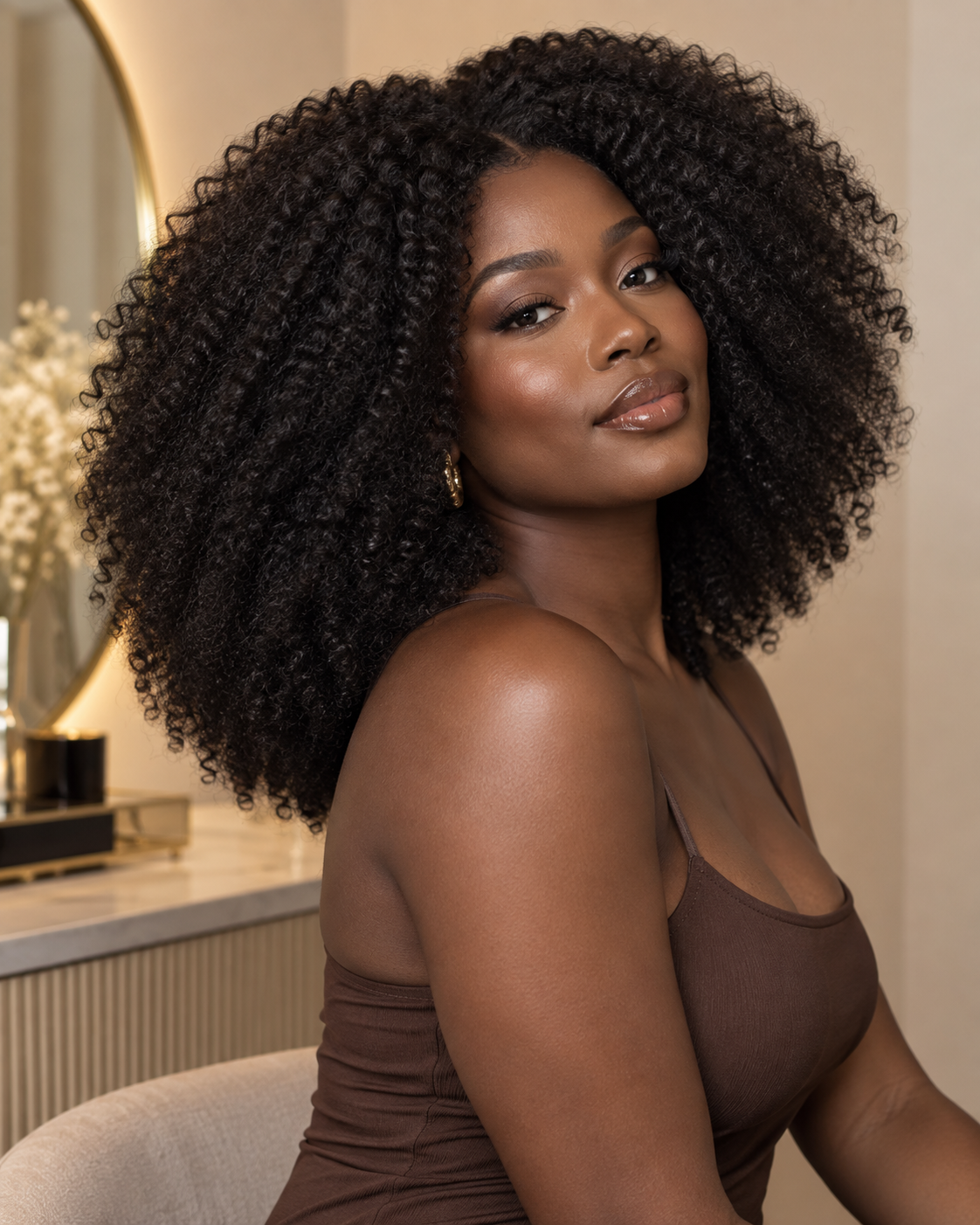
An Afro-textured wig is a wig designed with fuller curls, coils, kinks, or natural-hair-inspired texture rather than a smooth straight or loose-wave finish.
The category can include Afro wigs, coily wigs, kinky curly wigs, tightly curled styles, stretched Afro textures, and other wigs designed to resemble aspects of naturally textured hair.
These styles may appeal to African women, African American women, women of color, natural-hair wearers, and textured-hair shoppers who want volume and texture that feel familiar rather than highly processed or silky.
The best Afro-textured wig should look intentional, not simply oversized.
Afro-textured wigs can create some of the fullest and most natural-hair-inspired silhouettes in the wig category. But volume alone does not make the texture convincing.
The curl or coil pattern should work with the overall shape. Density should support the style without making it look unnaturally heavy. The ends should remain textured rather than becoming thin or disconnected.
Product terminology can also be inconsistent. A wig labeled “Afro,” “coily,” “kinky curly,” or “natural texture” may look very different from another seller's version of the same term.
Close-up product photos, customer images, videos, and clear descriptions of density, length, fiber or hair type, and cap construction become especially useful.
Coils, curls, kinks, and shape create the overall silhouette.
Texture determines how large the wig appears, how short the length looks, and how much daily maintenance it may need.
Coils and curls define the texture
Afro-textured wigs may range from visible spirals to tighter coils and less-defined kinky textures.
The silhouette matters
Round, tapered, layered, elongated, and stretched Afro shapes can create very different looks.
Texture multiplies visual fullness
Tighter textures can look significantly fuller than straight hair even at similar listed density.
Visible length can be much shorter
Coils and curls may contract significantly compared with the wig's stretched measurement.
Dryness can change the look
Depending on the hair or fiber, lightweight moisture may help support softness and definition.
Gentle handling matters
Rough brushing may create frizz, matting, shedding, or loss of texture definition.
Afro texture can work beautifully for volume, natural styling, and protective-wear routines.
Afro-textured wigs may appeal to women who want a wig that reflects curls, coils, or fuller shapes commonly associated with textured natural hair.
They can also provide styling variety for natural-hair wearers who want to change length, shape, color, or fullness without manipulating their own hair as heavily.
Depending on the construction, Afro-textured wigs can work for everyday wear, protective styling, work, church, travel, events, photography, and creative styling.
They may be less suitable for someone looking for a very flat silhouette, frequent brushing, or an ultra-sleek finish.
The right density depends on the texture and the shape you actually want.
Afro-textured hair naturally occupies more visual space than sleek straight hair. That means a density number that sounds moderate may still create a very full appearance.
Tighter coil patterns can increase the visual width and height of the style. Layering and shaping can therefore matter as much as the amount of hair.
A carefully shaped medium-density Afro wig may look more natural than a very high-density wig that forms one heavy block of hair.
Look at the front, profile, and back view whenever possible. The side silhouette often reveals more about the true shape than a single front-facing image.
Afro-textured wigs can range from soft coils to dense natural-shaped styles.
Texture labels vary, so focus on the actual pattern, shape, density, and finish shown.
Rounded natural shape
Classic Afro wigs emphasize full shape and balanced volume around the head.
Tighter defined curls
Kinky curly wigs combine visible curl definition with substantial natural-looking fullness.
Small, tighter coil patterns
Coily textures can resemble tighter natural curl patterns and may show stronger shrinkage.
More elongated texture
Stretched styles create a fuller natural finish with less contraction than tightly coiled shapes.
Structured shorter shape
Tapered Afro wigs can provide controlled volume with shorter sides or nape areas.
Full texture at shorter length
Afro-textured bob styles can frame the face while reducing some of the maintenance of longer wigs.
Afro texture covers a broader family of natural-hair-inspired patterns.
These are general distinctions. Product terminology may differ significantly between sellers.
| Texture | Typical Look | What to Watch For |
|---|---|---|
| Kinky Straight | Blowout-inspired, textured straight finish. | Bulkiness, density, tangling, and texture retention. |
| Curly | Visible curl formation with moderate to high volume. | Curl definition, dryness, tangling, and shrinkage. |
| Kinky Curly | Tighter curls with fuller natural-hair-inspired texture. | Matting, density, moisture needs, and definition. |
| Coily | Small, tight coils with substantial shrinkage and volume. | Visible length, dryness, tangling, and shape. |
| Afro-Textured | Broad family of fuller curl, coil, kink, and Afro-inspired styles. | Exact pattern, shape, density, seller terminology, and maintenance. |
Check the exact texture pattern, density, shape, visible length, stretched length, cap fit, lace, parting, fiber or hair type, care instructions, customer photos, and return policy.
Do not judge an Afro-textured wig only by how large or full it looks.
Look for recurring customer reports involving tangling, matting, dryness, shedding, softness, shrinkage, odor, washing, product buildup, and whether the original texture remains recognizable after care.
Shape and texture matter more than simply having more hair.
Choosing too much density
Coils and kinks already create substantial volume. Excess density can make a wig difficult to shape and maintain.
Ignoring shrinkage
Tighter Afro textures can look much shorter than their stretched measurement.
Brushing aggressively
Rough brushing may disturb the pattern, create frizz, and increase shedding or matting.
Using heavy products
Excessive creams, oils, or gels may create buildup and weigh down the texture.
Assuming every “Afro” wig has the same texture
The term can describe very different curl, coil, kink, and shape profiles. Always inspect the actual wig.
Choose natural-looking texture by pattern, shape, and routine.
These guides help place Afro-textured wigs within the larger texture and construction system.
Wig Textures Guide
Review straight, wavy, curly, kinky straight, coily, and Afro-textured options.
Read the GuideCurly Wigs
Review curl pattern, density, shrinkage, moisture, and maintenance.
Read the GuideKinky Straight Wigs
Explore textured straight styles, blending, fullness, and blowout-inspired finishes.
Read the GuideKinky Curly Wigs
Go deeper into tighter defined curls and natural-hair-inspired volume.
Coming SoonHalf Wigs
Learn how leave-out and texture matching affect natural-looking blending.
Read the GuideAfro-Textured Wig Reviews
Browse research-based reviews with customer-reported patterns clearly separated.
Browse ReviewsAnswers to common Afro-textured wig questions.
What is an Afro-textured wig?
An Afro-textured wig uses curls, coils, kinks, or fuller natural-hair-inspired texture rather than a smooth straight or loose-wave finish.
Are Afro-textured wigs the same as kinky curly wigs?
Not always. Kinky curly is one specific texture family, while Afro-textured wigs can include kinky curly, coily, classic Afro, stretched Afro, and other natural-inspired patterns.
Do Afro-textured wigs look shorter than straight wigs?
They often can. Tighter curls and coils create shrinkage, so visible length may be substantially shorter than the stretched measurement.
Are Afro-textured wigs difficult to maintain?
Maintenance depends on the exact pattern, hair or fiber type, length, density, and care routine. Tighter textures may require more careful detangling and moisture management.
Can an Afro-textured wig look like natural hair?
It can when the texture, shape, density, color, hairline, parting, and overall finish suit the wearer and the desired natural-hair look.
What should I check before buying an Afro-textured wig?
Check texture close-ups, shape, density, visible and stretched length, cap fit, lace, parting, hairline, hair or fiber type, care guidance, customer photos, return policy, and recurring reports about tangling, shrinkage, dryness, shedding, and matting.
Choose texture that feels intentional, familiar, and manageable.
Use The Wig Standard’s guides and reviews to examine coil pattern, shape, density, shrinkage, moisture needs, cap construction, seller claims, and customer-reported experiences before buying.