More visible than body wave
Deep wave has a stronger repeating wave pattern with greater texture from roots toward the ends.

Deep wave wigs deliver defined waves, noticeable volume, and more texture than body wave styles. This guide covers wave definition, density, shrinkage, tangling, moisture, lace, parting, maintenance, and the buying details worth checking before you order.
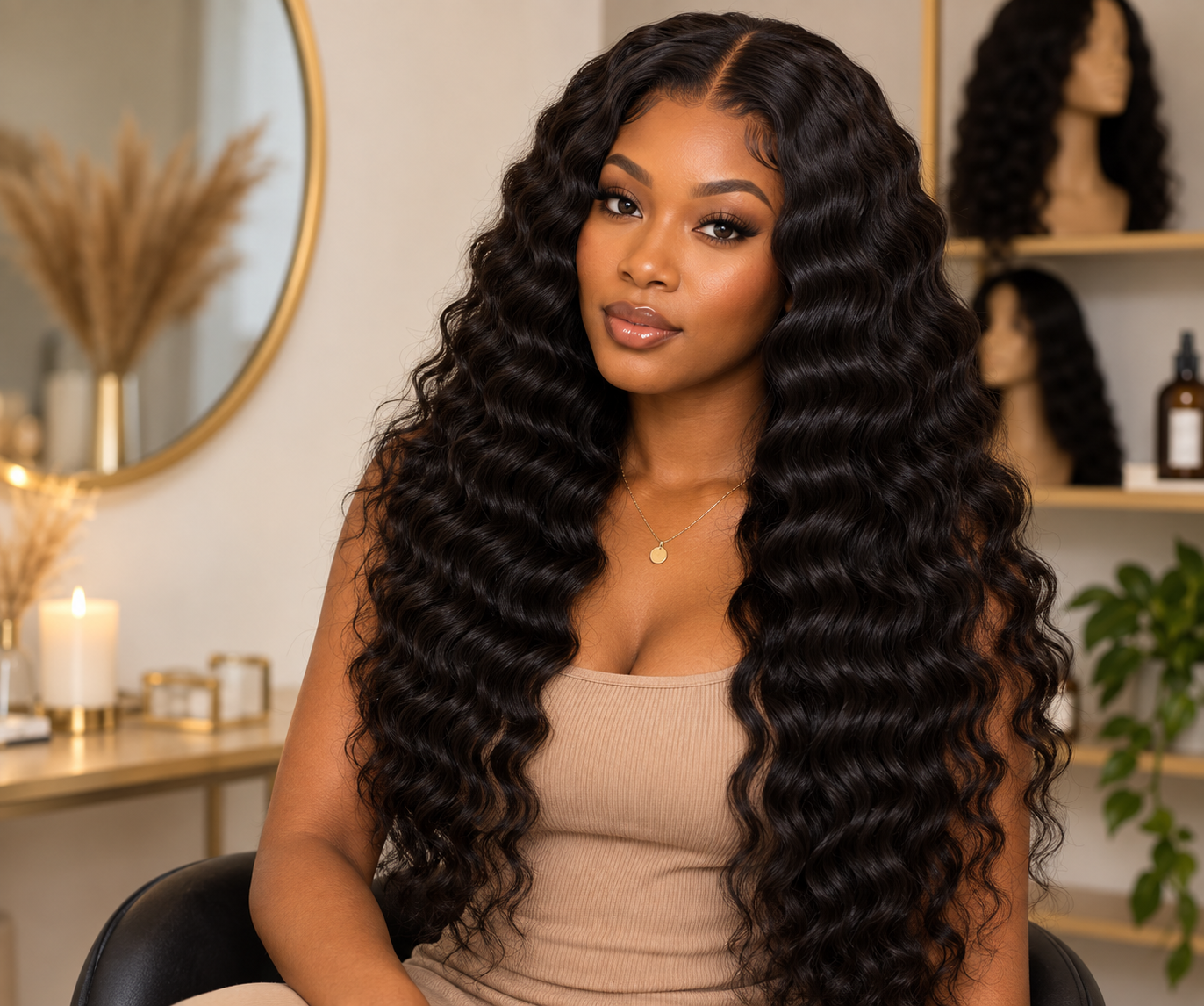
A deep wave wig has a more defined and repeated wave pattern than body wave hair, creating noticeable texture and fuller-looking movement without becoming a tight curl.
Deep wave wigs may be human hair or synthetic and can come in lace-front, closure, glueless, short, medium, long, layered, side-part, or middle-part constructions.
They may appeal to African women, African American women, women of color, natural-hair wearers, and textured-hair shoppers who want a fuller wave pattern with stronger definition.
Deep wave sits between loose wave textures and tighter curls. The pattern is more visible than body wave, with repeated bends that can create substantial volume.
That extra texture can make deep wave wigs look full even without very high listed density. It can also increase the importance of detangling, moisture, product buildup, and storage.
Some deep wave wigs arrive highly defined and loosen after washing. Others may maintain a stronger pattern. Seller descriptions alone do not always tell you how the wig will behave after normal care.
Product videos, customer photos, return policies, and recurring reports about tangling, dryness, shedding, and wave retention deserve close attention.
The stronger pattern changes how the wig looks, feels, tangles, dries, and responds to styling.
Deep wave has a stronger repeating wave pattern with greater texture from roots toward the ends.
The wave pattern can create substantial visual volume without requiring extremely high density.
Deep wave hair may appear shorter than straight hair of the same measured length because of the pattern.
Defined waves may benefit from lightweight moisture depending on the wig and seller care instructions.
Careless brushing may increase frizz, tangling, and shedding.
Some deep wave wigs may need light refreshing after wear, washing, or sleeping.
Deep wave may suit someone who wants more definition than body wave but does not want the tighter shape of curly or coily textures.
The style can work for everyday wear, vacations, date nights, events, photos, protective styling, and other looks where fuller texture is part of the appeal.
Natural-hair wearers may also appreciate deep wave when they prefer visibly textured hair that feels softer and less sleek than straight options.
It may be less suitable for shoppers who want a very simple brush-and-go routine or who dislike detangling and curl-pattern maintenance.
Density numbers can be useful, but texture changes how fullness appears. Deep wave hair spreads visually because the repeated pattern creates body throughout the length.
A very high-density deep wave wig can become bulky, heavy, or harder to manage. A lower density may still appear full because the texture itself creates volume.
Length also affects the pattern. Longer deep wave wigs may have more opportunities for friction and tangling, especially at the nape and ends.
Check unstretched and stretched views when available so you understand both the visible length and the actual hair length.
Look beyond the wave name and consider the cap, lace, parting, density, and daily routine.
Long lengths show the pattern dramatically but may bring more tangling and maintenance.
Shorter deep wave styles can keep the fullness while reducing some of the friction associated with long hair.
Layers can help distribute volume and keep the texture from appearing too heavy.
Glueless construction may reduce adhesive use while still offering a strong wave pattern.
Lace-front construction may offer more hairline options depending on lace size and design.
Closure construction can offer a simpler front while still supporting middle or side parting.
Texture names vary between sellers, so the actual pattern shown in photos and videos matters more than the label alone.
| Texture | Typical Look | What to Watch For |
|---|---|---|
| Straight | Smooth with little visible texture. | Shine, stiffness, density, and thin ends. |
| Body Wave | Loose, soft bends with moderate movement. | Wave retention and pattern loosening. |
| Deep Wave | Defined repeating waves with fuller visual texture. | Tangling, dryness, buildup, and wave retention. |
| Curly | More rounded curl formation and stronger shrinkage. | Curl definition, frizz, moisture, and detangling. |
| Kinky Curly | Tighter natural-hair-inspired curl pattern. | Density, shrinkage, moisture needs, and matting. |
Check wave consistency, density, stretched length, visible length, end quality, cap fit, lace type, parting space, hairline, hair or fiber type, and return policy.
Videos and customer photos are especially useful because they can reveal real volume, movement, frizz, and wave retention.
Look for recurring customer-reported patterns involving tangling, shedding, dryness, matting, odor, softness, washing, and whether the waves return after care.
Rough brushing can separate the pattern, increase frizz, and make tangling worse.
Deep wave already looks full. Very high density can make the wig heavier and harder to manage.
Too much oil, cream, or styling product can weigh waves down and create buildup.
Deep wave may appear shorter than the stretched measurement, especially in tighter patterns.
The wave may loosen, separate, or change with wear, washing, brushing, humidity, and styling.
These pages help put deep wave in context with nearby textures and wig constructions.
Review straight, body wave, deep wave, curly, kinky straight, and Afro-textured wigs.
Read the GuideReview softer, looser wave patterns and lower-maintenance styling.
Read the GuideExplore curl definition, density, shrinkage, moisture, and maintenance.
Read the GuideUnderstand fit, bands, combs, lace, and no-adhesive wear.
Read the GuideReview lace shade, parting, knots, fit, and hairline details.
Read the GuideBrowse research-based reviews and customer-reported patterns.
Browse ReviewsA deep wave wig has a defined repeating wave pattern that is usually stronger than body wave and looser than many curly textures.
Deep wave usually has smaller, more defined repeated waves, while body wave has larger, looser bends and softer movement.
They can experience more tangling than straighter textures because the wave pattern creates more friction. Hair quality, length, care, and product buildup also matter.
Yes. The wave pattern can make the visible length appear shorter than the stretched measurement.
Some human hair deep wave wigs may tolerate heat styling, but the seller's care instructions and heat limits should be checked first.
Check wave consistency, density, visible and stretched length, ends, lace, cap fit, parting, hairline, hair or fiber type, seller policies, customer photos, and reports about tangling, dryness, shedding, and wave retention.
Use The Wig Standard’s texture guides and reviews to evaluate wave definition, density, shrinkage, tangling, moisture needs, lace, seller claims, and customer-reported experiences before buying.