Long Straight Wigs
Sleek straight lengths highlight shine, movement, parting, density, and especially the condition of the ends.

Long wigs offer dramatic length, movement, styling flexibility, and presence, but more hair also brings more friction, tangling, weight, washing, drying, and end maintenance. This guide explains what to check before choosing a long wig.
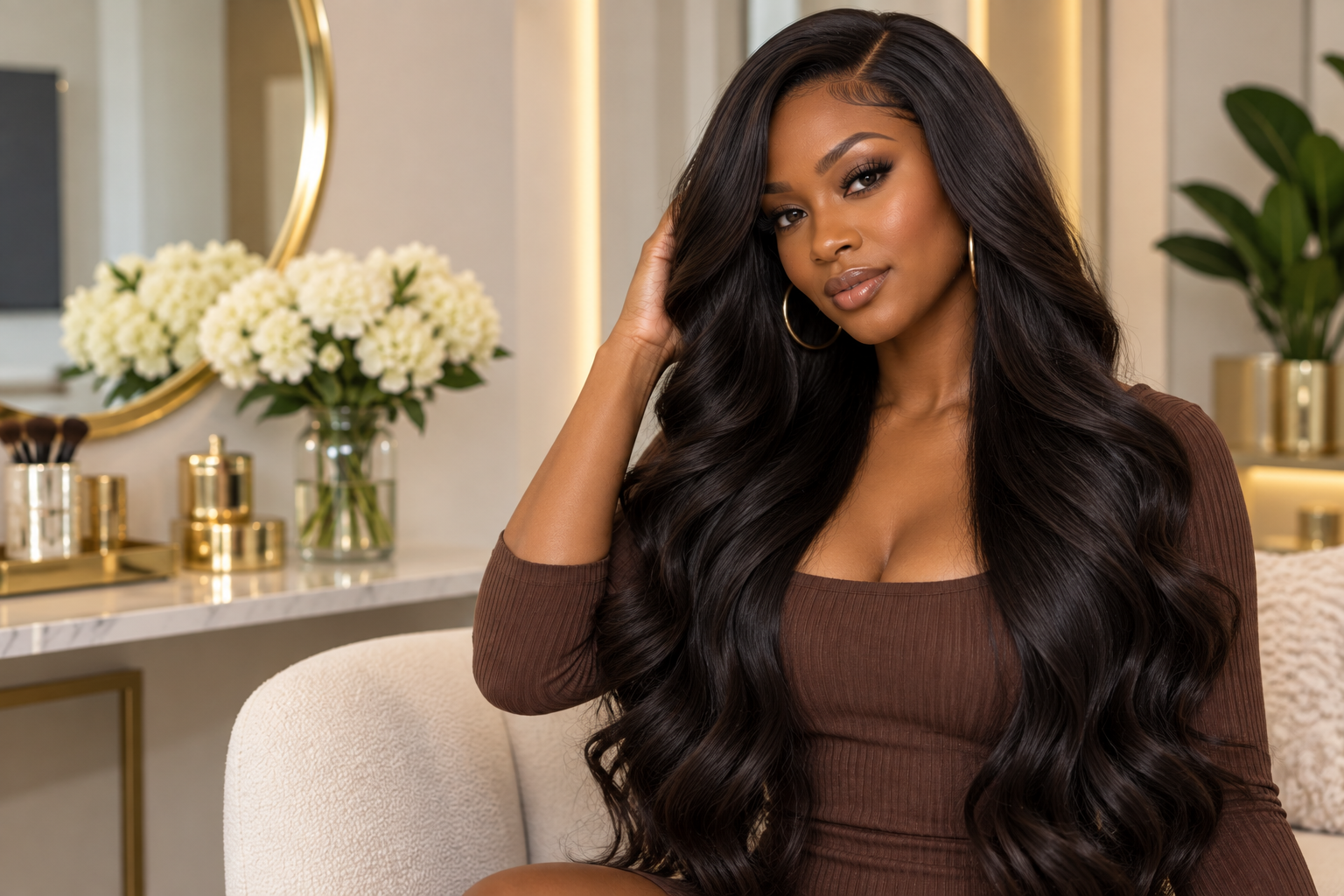
A long wig generally extends below the upper chest and may continue toward the mid-back, waist, or lower depending on the listed length, texture, layers, and the wearer's height.
Straight wigs tend to show more of their measured length. Wavy, curly, coily, and Afro-textured wigs can appear shorter because the hair bends, curls, or contracts instead of falling directly downward.
Long wigs may appeal to shoppers who want dramatic movement, more styling options, and a longer silhouette, but they usually require more attention than short or medium-length styles.
Longer hair gives you more room for waves, curls, layers, ponytails, half-up styles, braiding, dramatic side parts, and other looks depending on the wig's construction.
It can also create a strong visual statement. Sleek straight hair, flowing body waves, defined curls, and textured long styles each produce very different silhouettes.
For African American women, African women, women of color, natural-hair wearers, and textured-hair shoppers, long wigs can provide access to length without requiring years of natural-hair growth or frequent manipulation of the wearer's own hair.
The tradeoff is maintenance. More length means more strands rubbing against clothing, furniture, car seats, scarves, jackets, and the back of the body throughout the day.
A long straight wig, long body wave, and long curly wig can have the same listed measurement and still look completely different when worn.
Sleek straight lengths highlight shine, movement, parting, density, and especially the condition of the ends.
Loose waves add softness and movement while giving long hair a fuller silhouette than bone-straight styles.
More defined waves create substantial visual texture but may require added attention to tangling and moisture.
Curl pattern can create dramatic fullness while making the wig appear shorter than its stretched measurement.
Blowout-inspired texture can create substantial body and a fuller natural-hair-inspired long look.
Layers can reduce heaviness, improve movement, frame the face, and keep very long hair from looking flat or blocky.
A long straight wig can display nearly all of its measured length because the strands fall directly downward.
Body wave and deep wave patterns reduce some visible length because the hair travels through bends and curves.
Curly and coily styles may contract much more. A wig can contain very long strands while the finished style sits substantially higher on the body.
Always check whether the seller measures textured hair stretched, and look at photographs showing the wig in its normal styled state.
Long wigs already contain more hair simply because the strands are longer. Adding very high density can make the wig feel heavier and create substantially more volume.
That may be desirable for some styles, but excessive density can make long hair harder to detangle, wash, dry, and wear comfortably.
Texture matters too. Long kinky straight, curly, coily, or Afro-textured hair can appear much fuller than long silky straight hair at a similar listed density.
Rather than chasing the largest density number, look for a balance between fullness at the crown, movement through the length, and healthy-looking ends.
The nape is a common friction point because hair rubs against the neck, shoulders, collars, and clothing.
Longer ends also come into contact with chairs, bags, coats, car seats, bedding, and other surfaces.
Gentle detangling, appropriate moisture, careful washing, suitable heat practices where allowed, and proper storage can all become more important with increased length.
Pay attention to the bottom several inches. A long wig may look impressive at first glance but feel less polished if the ends become thin, rough, dry, or tangled.
| Texture | Typical Long-Wig Look | What to Watch For |
|---|---|---|
| Straight | Maximum visible length with a sleek silhouette. | Thin ends, tangling, shine, density, movement. |
| Body Wave | Soft flowing waves with moderate fullness. | Wave retention, frizz, tangling, end condition. |
| Deep Wave | Defined waves with a fuller long silhouette. | Matting, moisture, shrinkage, pattern retention. |
| Curly | Full curls with less visible length than stretched. | Shrinkage, tangling, dryness, density, definition. |
| Kinky Straight | Long blowout-inspired texture with substantial body. | Bulk, density, tangling, texture retention. |
| Coily / Afro-Textured | Full natural-hair-inspired length with strong contraction. | Visible length, matting, moisture, density, shape. |
Check listed and visible length, texture, model height when available, density, layers, end thickness, cap construction, side and back views, and whether textured hair is measured stretched.
Do not evaluate only the crown and hairline. Inspect the bottom several inches carefully.
Customer reports can help identify recurring issues involving nape tangling, matting, shedding, dry ends, thin ends, inaccurate length, excessive weight, unusual shine, or texture changes after washing.
Every additional inch adds more hair to detangle, wash, dry, style, store, and protect from friction.
Very long wigs can lose their polished look when the ends become noticeably thin compared with the upper sections.
High density combined with long length can become heavy and difficult to manage.
The area behind the neck often experiences some of the greatest friction and may require extra attention.
Curly, kinky, and coily textures may look substantially shorter once they return to their normal pattern.
Use these guides to narrow the kind of long wig that fits your styling preferences and routine.
See how short, medium, long, and bob wigs differ in appearance, movement, and maintenance.
Read the GuideReview shoulder and upper-chest lengths, layering, movement, and everyday manageability.
Read the GuideUnderstand straight texture, shine, density, movement, parting, and end quality.
Read the GuideReview loose waves, movement, density, styling, and maintenance.
Read the GuideLearn how curl pattern, shrinkage, density, tangling, and moisture affect long styles.
Read the GuideBrowse reviews that separate seller claims, customer reports, and editorial analysis.
Browse ReviewsLong wigs generally extend below the upper chest and may reach the mid-back, waist, or lower depending on the listed measurement, texture, layers, and the wearer's height.
They can because more hair comes into contact with the neck, clothing, furniture, bags, and other surfaces. Hair quality, texture, product buildup, and care also affect tangling.
They can be, especially when long length is combined with high density or naturally fuller textures.
Curls and coils contract the visible length. The strands may be long when stretched but sit significantly higher when worn in their normal pattern.
Look for reasonably consistent thickness, smoothness, movement, and an absence of obvious dryness, matting, or a dramatic loss of density through the bottom section.
Check visible and listed length, texture, density, model height when available, layers, end thickness, cap construction, customer photos, measurement method, maintenance needs, and return policy.
Look at visible length, texture, weight, density, nape friction, tangling, end quality, cap construction, and the maintenance you realistically want before buying.