
HD Lace vs. Transparent Lace
HD lace and transparent lace are both used to create a less visible wig hairline, but the terms do not always mean exactly the same thing from one seller to another. Here is what to look at before deciding which lace makes more sense for your complexion, routine, and budget.
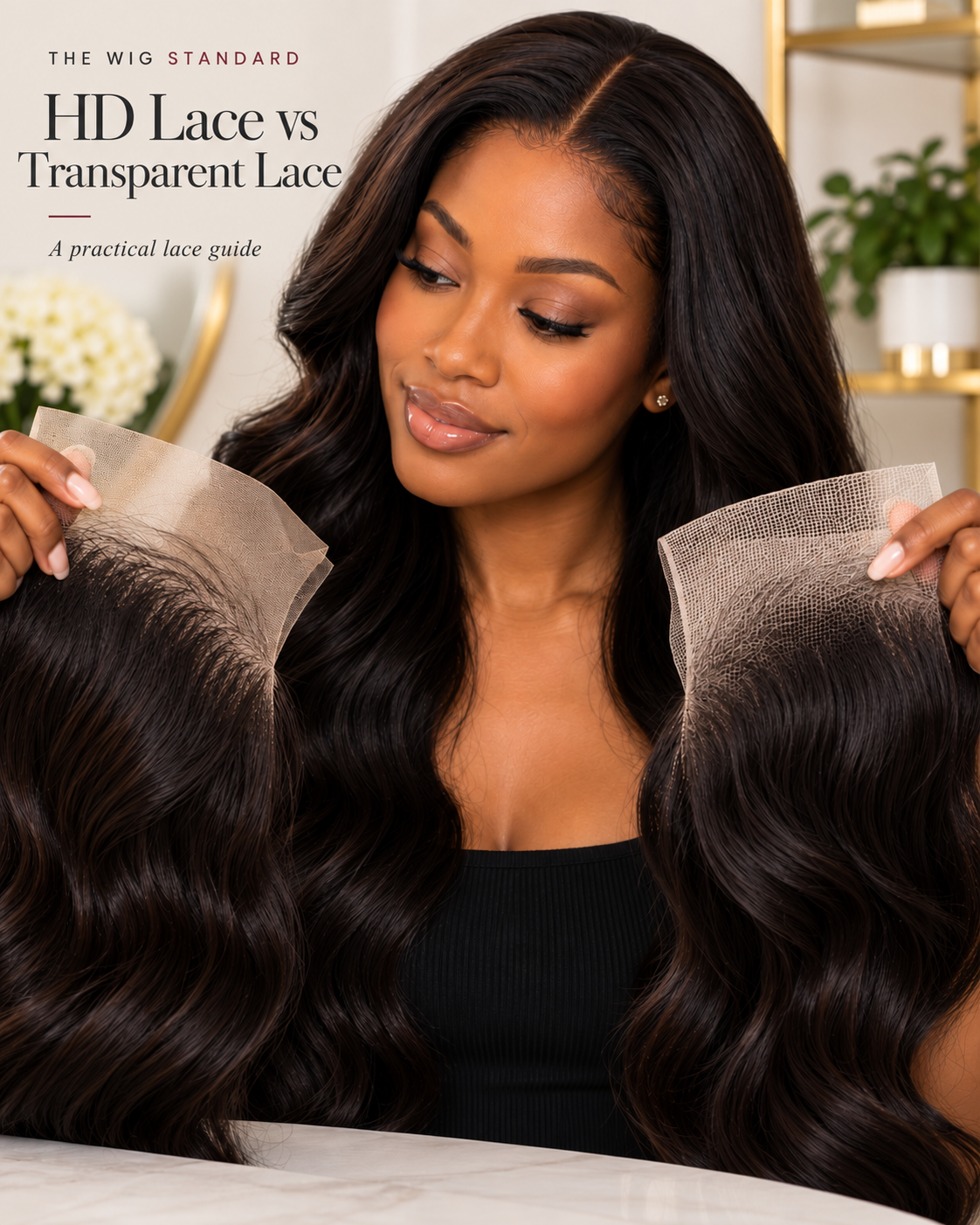
HD lace is commonly marketed as very fine, thin lace designed to appear less visible against the skin.
Transparent lace usually refers to light or nearly colorless lace intended to be adjusted or blended across a range of complexions.
In practice, sellers may use these terms loosely. The actual lace color, thickness, texture, durability, knot visibility, and how it looks against your complexion matter more than the name alone.
Start with the actual lace, not the marketing term.
HD lace is generally sold as a finer, thinner lace intended to blend closely against the skin and create a less noticeable edge.
Transparent lace usually describes lace with a very light or nearly colorless appearance. That can make it adaptable with tint, makeup, or other blending methods, but it may also look too pale on some deeper complexions before adjustment.
There is no universal industry rule that guarantees every “HD” lace wig is thinner than every “transparent” lace wig.
Usually marketed for a finer-looking melt
HD lace is often promoted for its thin appearance and ability to become less noticeable around the hairline.
Usually starts lighter in color
Transparent lace is typically designed to be light enough to adjust across different skin tones using tint, makeup, or other blending methods.
Thin lace can still show if the color is wrong.
Lace visibility depends on more than thickness. Color, undertone, knot size, adhesive residue, makeup, lighting, and how closely the lace lies against the skin can all affect the result.
Very pale lace can create a gray, chalky, or ashy cast on deeper complexions if it is not adjusted properly.
A slightly more visible lace material in a better shade may sometimes look more natural than finer lace that contrasts strongly with the wearer's skin.
HD lace is not automatically the better choice for dark skin.
African American women, African women, and other women with deeper complexions may find that some very light lace needs tinting or makeup before it blends naturally.
The issue is not that transparent or HD lace cannot work. It is that the starting color may be far lighter than the wearer's complexion.
Brown lace, medium-brown lace, darker lace, carefully tinted transparent lace, and certain HD lace shades may all work depending on complexion and undertone.
Product photos taken under bright studio lights may not show the same lace visibility you see in daylight or close-up photography.
Do not assume that HD lace automatically disappears on every complexion or that transparent lace automatically needs heavy tinting.
Look at the actual lace shade, texture, edge, knot appearance, and customer photos on women with complexions similar to yours.
Lighting can dramatically change how visible lace appears, so multiple photos are more useful than one heavily edited product image.
Finer lace is not necessarily the best choice for every routine.
Lace that is very thin may require more careful handling during installation, removal, cleaning, storage, and repeated wear.
A beginner who removes and reapplies a wig frequently may value durability differently from someone wearing a wig occasionally for events or photography.
Lace quality cannot be judged from the HD label alone. Look for customer reports about tearing, fraying, stretching, and repeated use.
Transparent lace is often treated as a starting point rather than the finished shade.
Lace tint sprays, foundation, powders, or other complexion products are sometimes used to reduce contrast between lace and skin.
The goal should be a believable shade and undertone rather than simply making the lace darker.
Products can transfer, build up, or affect how lace looks over time, so follow the manufacturer's directions and use only as much adjustment as needed.
Lace is only one part of a natural-looking front.
Knot size, knot color, bleaching, hairline density, pre-plucking, parting, and how the hair is ventilated into the lace all affect the final appearance.
A fine HD lace base with very dark, obvious knots can still require adjustment.
Likewise, transparent lace with a well-designed hairline and suitable tint may look very convincing.
Side-by-side reference.
| Feature | HD Lace | Transparent Lace |
|---|---|---|
| Typical Marketing | Fine, thin, less visible lace. | Light or nearly colorless lace. |
| Starting Shade | Varies by seller and product. | Usually very light. |
| Deeper Complexions | May still need shade adjustment. | Often needs tint or makeup to reduce contrast. |
| Durability | Very fine versions may require gentler handling. | Varies considerably by lace construction. |
| Visibility | Can appear very fine when shade and installation work well. | Can blend well after suitable shade adjustment. |
| Most Important Check | Actual lace thickness, shade, knots, and customer photos. | Actual lace color, texture, thickness, and tinting needs. |
Six details matter more than “HD” on the listing.
A strong lace purchase starts with evidence about the actual unit rather than relying on one marketing term.
Lace Shade
Look for close-up photos showing the actual color of the lace before installation.
Lace Thickness
Check whether customer photos and reviews support claims that the lace is genuinely fine.
Knot Appearance
Visible dark knots can affect realism even when the lace itself is thin.
Hairline Density
A dense wall of hair can make the front look less natural regardless of lace type.
Customer Photos
Look for photos across different skin tones and lighting conditions whenever possible.
Return Policy
Know whether cutting, tinting, or applying products to the lace affects return eligibility.
Keep looking at the details around the hairline.
Lace shade, installation, construction, and complexion all affect the final result.
Best Lace Color for Dark Skin
Understand how lace shade and undertone can affect visibility on deeper complexions.
Lace Color GuideWhy Does Wig Lace Look Gray?
See why pale lace can appear gray or ashy against deeper skin and what factors contribute.
Read GuideLace Front Wigs
Review lace-front construction, hairlines, parting, fit, and installation considerations.
Lace Front GuideGlueless Wigs
See how lace, elastic bands, cap fit, and security work in glueless constructions.
Glueless GuideLace Tint
Understand how lace tint is used to adjust shade and reduce contrast with the skin.
Lace Tint GuideWig Reviews
Browse research-based wig reviews with seller claims and customer-reported patterns separated clearly.
Browse ReviewsCommon questions about these two lace types.
Is HD lace better than transparent lace?
Not automatically. HD lace is often marketed as finer and less visible, while transparent lace usually starts very light in color. The better option depends on lace quality, complexion, installation, durability needs, and the specific wig.
Does HD lace work on dark skin?
It can, but the actual lace shade and undertone still matter. Some HD lace may need tint or makeup to reduce contrast on deeper complexions.
Does transparent lace work on dark skin?
Yes, but very pale transparent lace may need shade adjustment. Tint, makeup, and choosing a suitable undertone can help reduce visible contrast.
Is HD lace more delicate?
Very fine lace may require more careful handling, but durability varies by the actual material and construction rather than the HD label alone.
Can transparent lace be tinted?
Transparent lace is commonly adjusted with lace tint or complexion products, although the method should suit the lace and follow product instructions.
Which lace looks most natural?
The most natural-looking result depends on the combination of lace shade, thickness, knot appearance, hairline density, fit, installation, and how well the lace works with the wearer's complexion.
Choose the lace that works with your skin—not just the label on the box.
Look at shade, undertone, thickness, knots, hairline density, durability, customer photos, and how much tinting or adjustment you are willing to do.