Medium Straight Wigs
Straight medium-length wigs emphasize movement, ends, layering, parting, shine, and the quality of the cut.

Medium-length wigs sit in the practical middle: enough hair for movement, layers, curls, and styling without the full maintenance of very long lengths. This guide covers shoulder-length styles, visible length, texture, density, layering, tangling, comfort, and what to check before buying.
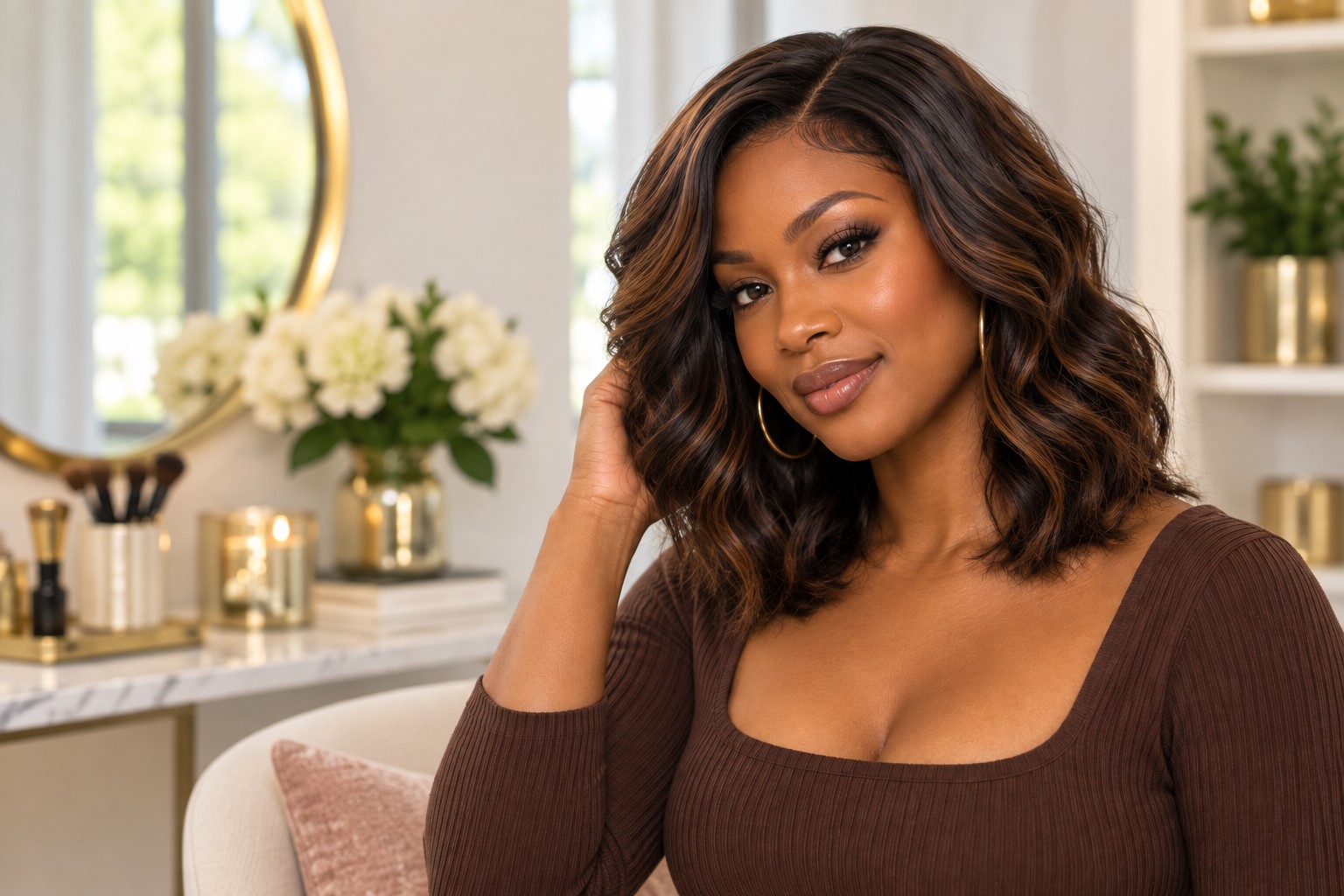
A medium-length wig generally falls somewhere around the shoulders to the upper chest, depending on the listed inches, texture, curl pattern, layers, and the wearer's height.
Straight medium-length wigs may show more of their measured length, while body wave, deep wave, curly, coily, and Afro-textured styles can appear shorter because of bends, curls, and shrinkage.
This length range often appeals to shoppers who want noticeable movement and styling flexibility without moving into the heavier maintenance of long or extra-long wigs.
Medium lengths can work well for women who want movement around the shoulders, enough hair for loose curls or layers, and a more noticeable silhouette than a cropped style.
They may also be easier to manage than very long wigs because less hair reaches the mid-back or lower, where friction and tangling can increase.
For African American women, African women, women of color, and textured-hair wearers, medium lengths can work across silky straight, yaki, kinky straight, body wave, curly, coily, and natural-hair-inspired textures.
The best medium length depends on more than inches. Texture, density, layers, face framing, and how the hair sits on your shoulders can change the look substantially.
The same general length range can look sleek, full, layered, curly, textured, or softly waved depending on the wig.
Straight medium-length wigs emphasize movement, ends, layering, parting, shine, and the quality of the cut.
Loose waves can add softness and volume while keeping the overall length manageable.
Curly medium styles can create substantial fullness while appearing shorter than their stretched measurement.
Layers can reduce bulk, create movement, frame the face, and help the wig avoid looking like one solid block of hair.
Kinky straight, coily, and other natural-hair-inspired textures can create fuller medium-length silhouettes.
Shoulder-length styles sit close to clothing and collars, making movement, friction, and end quality especially important.
Straight wigs usually show more of their measured length because the strands fall downward with less contraction.
Body wave and deep wave wigs use some of that length within the wave pattern, so the ends may sit slightly higher.
Curly, kinky curly, coily, and Afro-textured wigs may look substantially shorter because the hair coils inward or outward rather than falling directly down.
When shopping, look for both the listed measurement and photographs showing the wig in its normal styled texture. Stretched length alone does not tell you where it will visually fall.
High density can create dramatic fullness, but too much hair around the shoulders may feel bulky, particularly in thicker or curlier textures.
Layers can help redistribute that volume. Shorter pieces around the face and crown may create shape while longer sections preserve the overall medium-length look.
Straight styles may reveal thin or uneven ends more easily, while curly and coily textures can hide some variation but create their own density challenges.
Rather than choosing the highest density number available, examine how the density works with the cut, texture, and final silhouette.
Hair that sits directly on the shoulders can rub against shirts, jackets, sweaters, scarves, and coat collars throughout the day.
That friction may contribute to tangling or dryness, particularly at the back and ends.
Curly and textured wigs may benefit from gentle detangling and appropriate moisture based on the hair or fiber. Straight wigs may require attention to smoothness, end quality, and heat use where permitted.
Storage also matters. A wig stand or other suitable storage method can help prevent the hair from folding, tangling, or losing its intended shape between wears.
| Texture | Typical Medium-Length Look | What to Watch For |
|---|---|---|
| Straight | Sleek shoulder to upper-chest appearance. | Thin ends, excessive shine, tangling, layers, movement. |
| Body Wave | Loose waves with soft volume and movement. | Wave retention, frizz, density, end quality. |
| Deep Wave | More defined pattern with a fuller silhouette. | Tangling, moisture, shrinkage, pattern consistency. |
| Curly | Fuller shape that may appear shorter than listed. | Shrinkage, matting, density, dryness, curl definition. |
| Kinky Straight | Blowout-inspired fullness with textured straightness. | Bulk, tangling, density, texture retention. |
| Coily / Afro-Textured | Full natural-hair-inspired shape with more contraction. | Visible length, shape, density, moisture, detangling. |
Check listed length, texture, model height when available, layers, density, cap construction, side and back views, end thickness, and whether curly textures are measured stretched.
Customer photos are especially useful for seeing whether the wig actually sits at shoulder, collarbone, or upper-chest level.
Also look for recurring reports about tangling at the shoulders, shedding, thin ends, matting, excessive density, unusual shine, incorrect length, or the texture changing after washing.
Hair that repeatedly rubs against clothing can tangle, dry out, or lose smoothness at the ends.
A very full wig may become bulky around the shoulders, especially in curly, kinky, or coily textures.
Curly and coily wigs may look significantly shorter when worn in their normal pattern.
Poorly placed layers can make a medium-length wig look uneven or top-heavy, while thoughtful layering can improve movement and face framing.
Because medium wigs often sit near the shoulders, thin or dry ends can become visually obvious.
Medium length is only one part of the decision. Texture, density, cap design, and styling needs shape the final experience.
See how short, medium, long, and bob wigs differ in appearance, movement, and maintenance.
Read the GuideExplore cropped cuts, pixies, tapered styles, short curls, and shorter bobs.
Read the GuideGo deeper into long-hair movement, tangling, density, weight, and maintenance.
Coming SoonUnderstand how straight, wavy, curly, kinky, and Afro textures change visible length.
Read the GuideReview wave pattern, movement, density, lace, parting, and everyday maintenance.
Read the GuideBrowse wig reviews that separate seller claims, customer reports, and editorial analysis.
Browse ReviewsMedium-length wigs generally fall around the shoulders to the upper chest, although the exact appearance depends on texture, curl pattern, layers, measurement method, and the wearer's height.
They can be because there is less hair to detangle, wash, dry, and protect from friction, but texture, density, construction, and styling routine also affect maintenance.
Curls and coils contract visible length. The strands may measure longer when stretched but sit closer to the shoulders when worn in their natural pattern.
They can. Hair that repeatedly touches clothing and collars may experience friction, particularly at the back and ends.
Yes. Medium lengths can provide enough hair for face framing, crown layers, and movement while still keeping the overall style relatively manageable.
Check listed and visible length, texture, model height when available, layers, density, end thickness, cap construction, customer photos, shoulder friction, measurement method, and return policy.
Look at visible length, texture, layers, density, shoulder friction, end quality, cap construction, and customer-reported experiences before choosing.